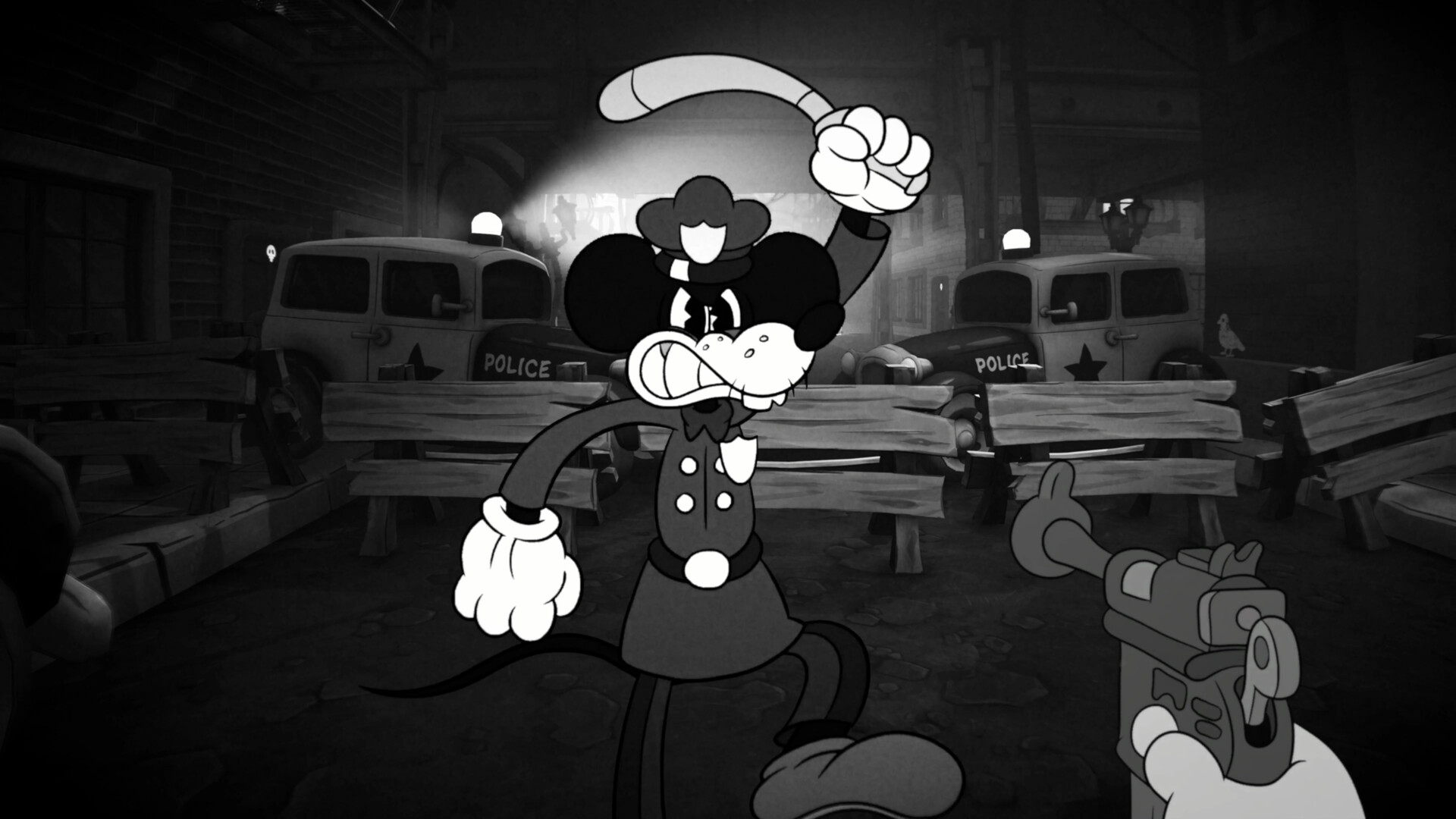
I watched gameplay of Mouse PI recently, and it pretty much lines up with what Game Wisdom pointed out in his review. The 1940s rubber-hose art style is an immediate gut-punch of nostalgia bold, rare, and clearly a labor of love. But the gameplay doesn't keep up. Mechanics like the Popeye-inspired spinach power-up feel disconnected, and the upgrade system lacks weight.

Shooting bad guys in Mouse P.I.
The missed opportunity stings a little: cartoon physics from that era are inherently game-ready. Enemies that stretch to absorb a thrown anvil, double-jumping in exaggerated slow-motion, a Wile E. Coyote moment where the floor disappears a second after the player looks down — that's a design language just waiting to be played, not just watched.
The takeaway: A standout art style gets players through the door. Gameplay that matches the aesthetic keeps them there. If your game has a world this visually distinctive, the mechanics should feel like they came from that world — not just dressed up in it.